Oops! Something went wrong while submitting the form.

Credit Ocean manufactures industrial round and flat braiding machines for rope, drawcord, shoelace, decorative braid and selected textile overbraiding. Tell us the braid shape, material and finished size, and we will recommend a suitable machine.
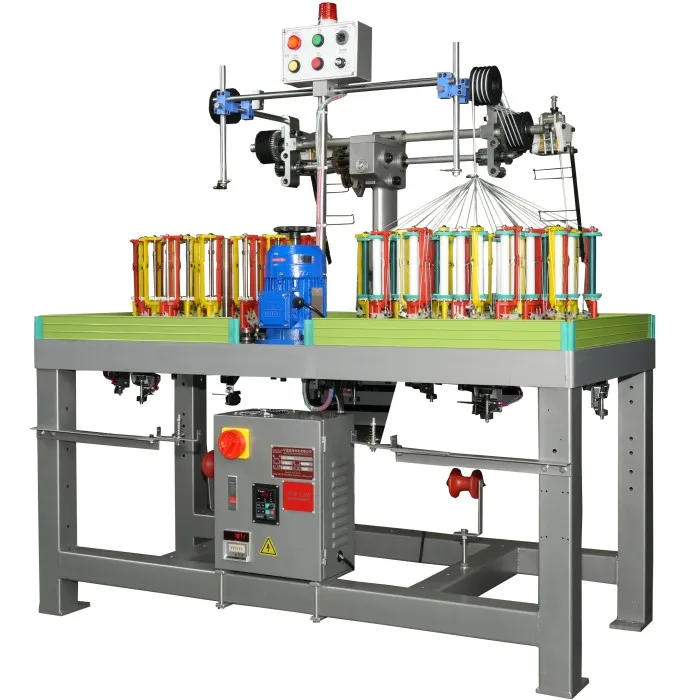
We supply the braider together with the carriers, bobbins, guides, tension parts and take-up required for the product.
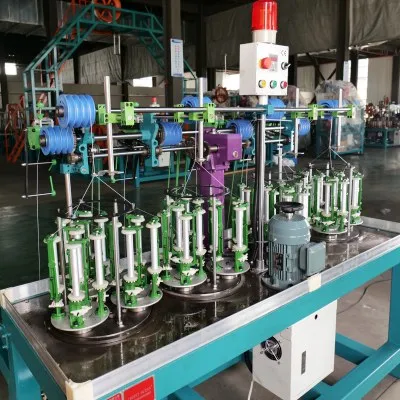
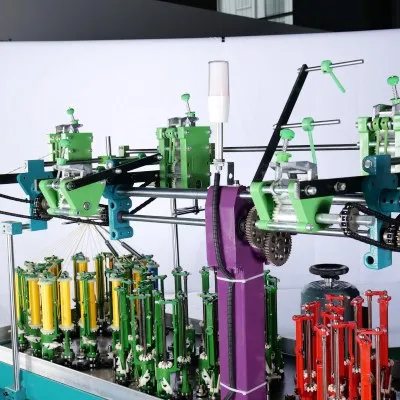

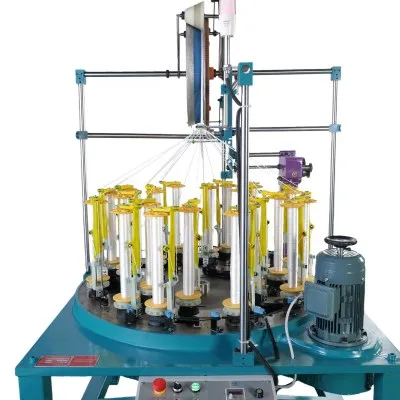
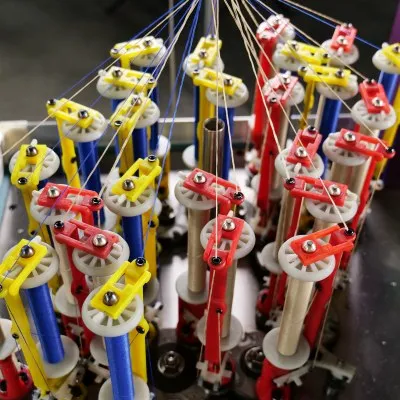
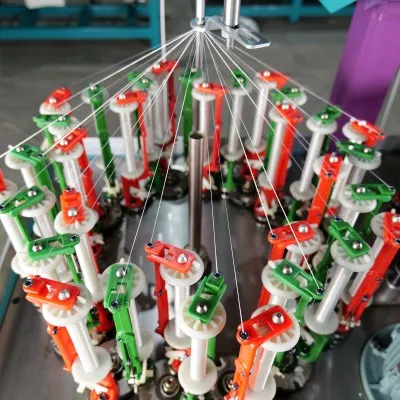
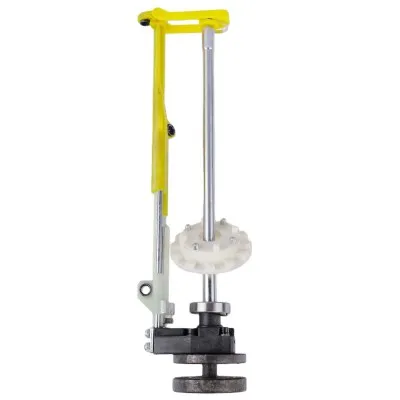
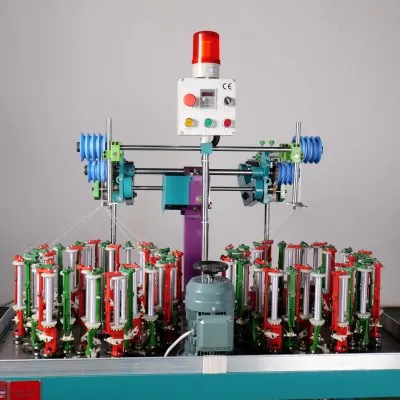
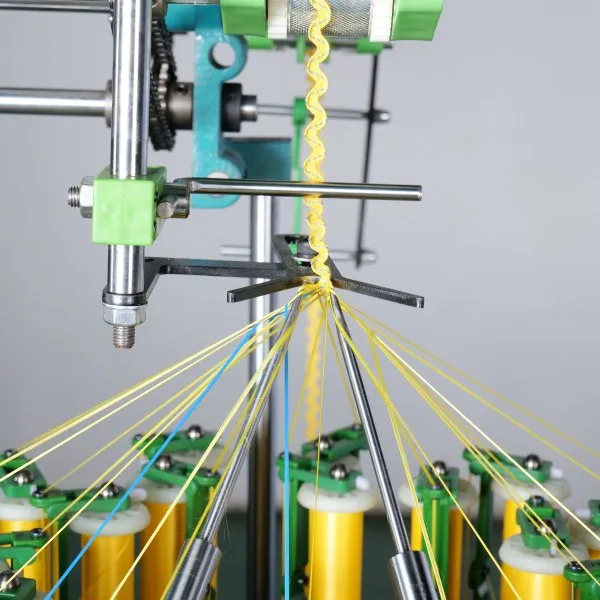
Start with the finished braid. Its shape, yarn, core and final size show which machine type fits.
For rope, round cord, round shoelace and many products braided over a core.
For flat shoelace, tape, trim and decorative braid.
Carrier count matters, but it does not set the finished diameter by itself.
Compare several round and flat models below. We also make other carrier counts and braid positions for different yarn packages and outputs.
| Model | Carriers / head | Braid positions | Braid | Machine size (mm) | Power | Voltage | Speed | Weight |
|---|---|---|---|---|---|---|---|---|
| COBR8-8 | 8 | 8 | Round | 1750×1100×1450 | 0.75 kW | 220–380V | 300 RPM | 550 kg |
| COBR12-4 | 12 | 4 | Round | 1180×1100×1450 | 0.75 kW | 220–380V | 360 RPM | 500 kg |
| COBR16-4 | 16 | 4 | Round | 1180×1100×1450 | 0.75 kW | 220–380V | 360 RPM | 500 kg |
| COBR24-2 | 24 | 2 | Round | 1350×1000×1450 | 0.55 kW | 220–380V | 360 RPM | 500 kg |
| COBR32-2 | 32 | 2 | Round | 1500×1000×1500 | 0.55 kW | 220–380V | 360 RPM | 500 kg |
| COBR40-2 | 40 | 2 | Round | 1750×1100×1500 | 0.75 kW | 220–380V | 360 RPM | 550 kg |
| COBR48-2 | 48 | 2 | Round | 1750×1100×1500 | 0.75 kW | 220–380V | 400 RPM | 550 kg |
| COBF9-8 | 9 | 8 | Flat | 1800×900×1450 | 0.55 kW | 220–380V | 400 RPM | 550 kg |
| COBF13-4 | 13 | 4 | Flat | 1650×750×1450 | 0.55 kW | 220–380V | 360 RPM | 500 kg |
| COBF17-4 | 17 | 4 | Flat | 1800×900×1450 | 0.55 kW | 220–380V | 360 RPM | 550 kg |
| COBF21-4 | 21 | 4 | Flat | 1950×900×1500 | 0.75 kW | 220–380V | 400 RPM | 550 kg |
Braid positions show how many cords or tapes the listed machine arrangement can produce at the same time. Bobbin size, take-up and other special parts are matched to the confirmed yarn and product.
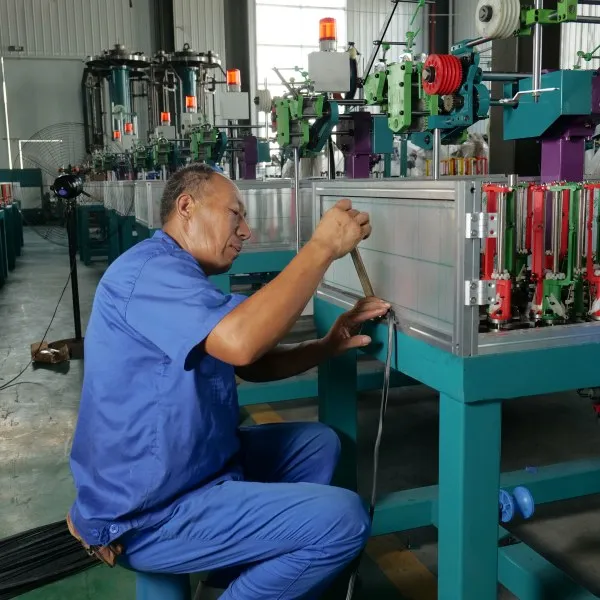
Watch the carrier track and take-up during a workshop test run.

We have worked with braiding machines since 2002, from model selection to testing and spare parts.
We work with round and flat braiders for rope, cord, shoelace and other textile braids.
The required braid determines the carriers, braid positions, bobbins and take-up we prepare.
We run the carrier track, motor and take-up before the machine is packed.
Machine orders include 1-year after-sales support and ongoing spare-parts supply.
For the first quotation, include the four production details listed here.
MOQ starts from 1 machine. Production is usually about 20 to 25 working days after order confirmation.
Rope, cord, shoelace, tape, paracord or a product braided over a core.
Round, flat or over a core, plus the finished diameter or width.
Material, yarn size, number of ends and core diameter when applicable.
Output target, local voltage and destination country.
Winding and tipping support a braiding line. Knitting and weaving are different ways to make cord or tape.
Carrier count affects braid construction and yarn coverage. Braid positions show how many cords or tapes the listed machine arrangement can produce at the same time. Yarn size, number of ends, core diameter, braid density and take-up also affect the finished product.
Round and flat braids normally use different machine structures. Credit Ocean supplies both types. Tell us whether the finished product is round cord, round shoelace, flat shoelace, tape or trim.
The working range depends on machine pitch, carrier count, yarn package, core and take-up. The models listed here are common examples. Provide the finished diameter or width and a clear product photo for model selection.
Selected textile braiders can apply yarn over a cable, hose or rigid core. Metal-wire shielding normally needs a dedicated wire braider. Provide the wire diameter and required coverage for a separate review.
Yes. Industrial paracord is a braiding application. We need the sheath yarn, number of core yarns, finished diameter and output target before recommending a machine.
For a confirmed order, we prepare the agreed bobbins, guides, tension parts, motor, voltage and take-up, then run the machine before packing. Sample-making conditions depend on the yarn and product supplied.
The main variables are round or flat machine structure, carriers per head, braid positions, bobbin and take-up, motor and electrical specification, and any special yarn or core-handling parts. Once these are confirmed, we can prepare the quotation.
A close product photo helps us identify round braid, flat braid or another process before you order.


