
Shoelace Tips and Aglets: What They Are, How They’re Made, and What Machine Makes Them
Shoelace tips are easy to ignore until they crack, fall off, or fray. For buyers, designers, and manufacturers, that tiny end piece affects how a lace looks, how easily it threads through eyelets, and whether the finished product feels cheap or reliable.
Quick answer: The tip of a shoelace is called an aglet. In factory production, plastic aglets are usually made by applying shoelace tipping film to the lace end, while metal aglets are formed or crimped onto cords, drawstrings, leather laces, or premium shoelaces. The machine used for this process is commonly called a shoelace tipping machine or aglet machine.

What Are Shoelace Tips Called?
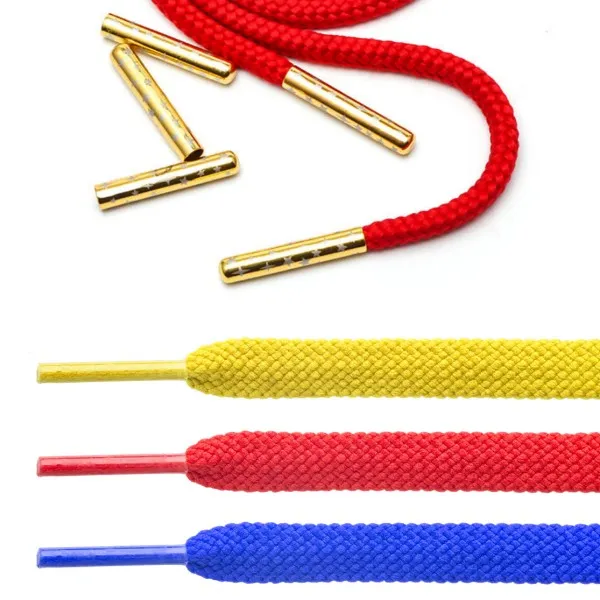
Shoelace tips are called aglets. They are the small plastic, metal, or coated ends attached to shoelaces, cords, and drawstrings.
Their job is simple but important: they keep the lace from fraying and help the lace slide through eyelets, garment holes, cord locks, and other narrow openings.
The word is sometimes spelled or searched in different ways, including “shoe lace tips,” “shoelace ends,” “lace tips,” and “the plastic tip at the end of a shoelace.” In manufacturing, buyers may also use terms like plastic aglet, metal aglet, cord tip, or tipping end.
Why Aglets Matter More Than They Look
An aglet is small, but it affects the first impression of a finished lace. A clean tip makes the lace easier to thread, more comfortable to use, and more consistent in appearance.
Without a finished end, braided or knitted yarns can loosen quickly, especially after cutting.
A firm tip passes through eyelets and cord channels more smoothly than a soft, loose lace end.
Metal, colored, printed, or decorative tips can make a lace feel more premium.
That is why aglets are used beyond footwear. You can find them on hoodie drawstrings, garment cords, paper bag handles, leather cords, elastic tapes, outdoor cords, and decorative packaging strings.
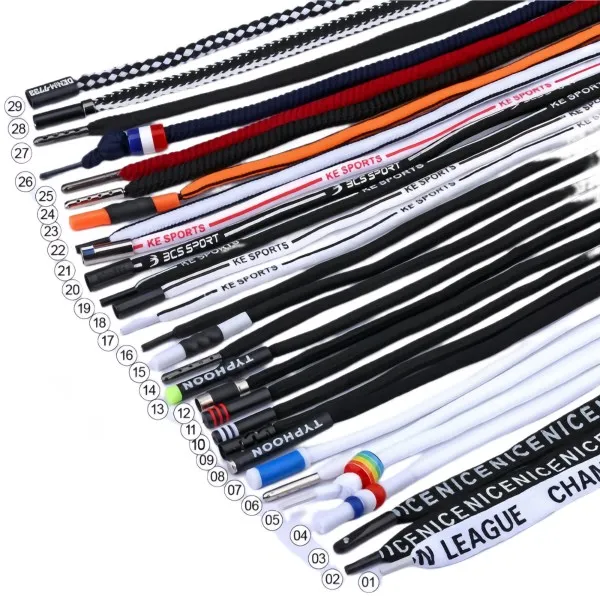
Common Types of Shoelace Tips
Most aglets can be grouped by material and end style. For factories, the question is not only “what looks best,” but also “what can be produced consistently at the required output.”
That is why material, finish, lace diameter, and production method should be considered together.
Common on everyday shoelaces and drawstrings. They are lightweight, efficient for mass production, and usually made with shoelace tipping film.
Used for premium shoelaces, leather cords, fashion drawstrings, and branded accessories where appearance and stronger end holding matter.
Used when the material and end style allow the lace end to be sealed, coated, or formed without a separate metal shell.
Can include colored finishes, logos, special shapes, or custom surface treatments for fashion and retail products.
How Are Shoelace Tips Made?
In factory production, shoelace tips are usually made after the lace or cord body has already been braided, knitted, woven, or otherwise formed. The end-finishing process depends on the material, the desired tip style, and the required production speed.
Plastic film aglet process
The lace or cord is fed into position. The machine controls where the tip will be applied so the finished length stays consistent.
Tipping film wraps around the lace end. Cellulose acetate tipping film is commonly used for plastic shoelace tips because it can form a neat, lightweight end.
Heat, pressure, or bonding helps form the tip. The exact method depends on the machine setup, film specification, and lace material.
The finished tip is cut or separated. The result should be clean, firm, and consistent across production runs.
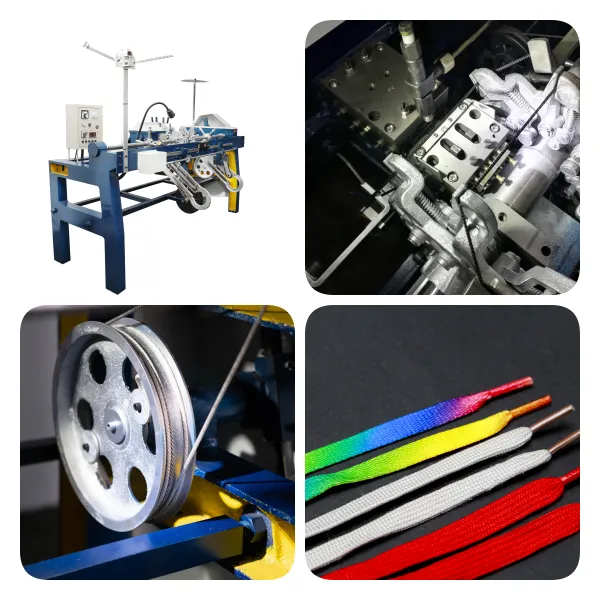
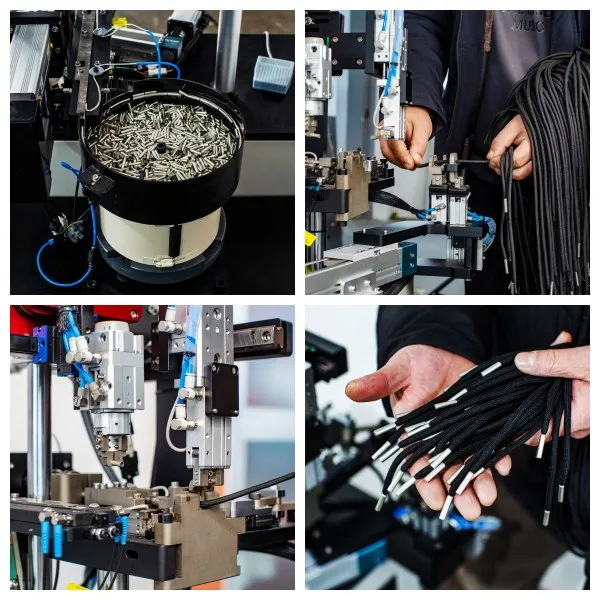
Metal aglet process
Metal aglets are usually formed from a small metal sleeve or strip that is wrapped, pressed, or crimped around the cord end. This creates a stronger and more premium-looking finish than a standard plastic tip.
Metal tips are common for leather laces, high-end hoodie drawstrings, fashion cords, and footwear brands that want a more refined finish.
Molded or coated tip process
Some lace ends can be sealed, dipped, coated, or molded depending on the material. This is more application-specific and is not always suitable for every lace structure.
Factory note: The best method depends on lace diameter, material, tip length, finish style, and output target. A good tipping result is not only about the machine; it also depends on matching the film, temperature, pressure, feeding, and cutting conditions.
What Machine Makes Aglets?
The machine that makes aglets is usually called a shoelace tipping machine, aglet machine, or shoelace tip making machine.
For plastic tips, the machine applies tipping film to the ends of shoelaces, cords, drawstrings, or elastic tapes. For metal tips, a metal aglet tipping machine forms or presses the metal end onto the cord.
You need efficient production for standard shoelaces, drawstrings, paper bag handles, or similar textile cords.
You need a premium finish for leather cords, fashion drawstrings, branded shoelaces, or decorative cords.
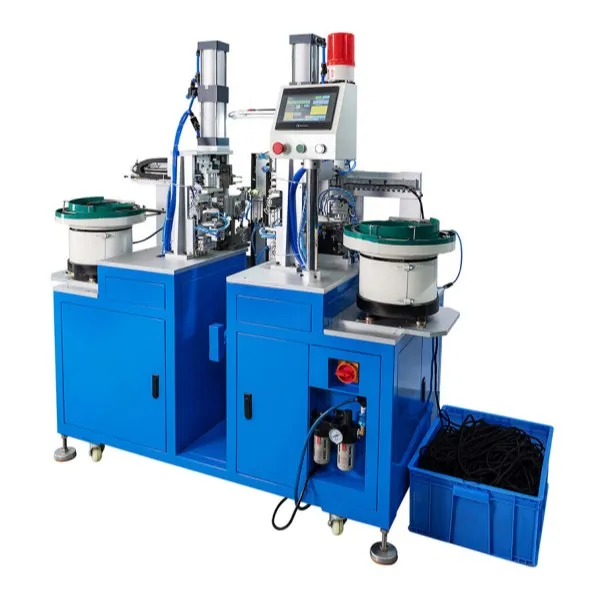
Need to Finish Shoelaces or Cords in Production?
Credit Ocean supplies shoelace tipping machines for plastic film tips, metal aglets, elastic tipping, and cord-end finishing. If your project uses plastic tips, you may also need cellulose acetate shoelace tipping film.
Plastic vs Metal Aglets: Which One Should You Choose?
Plastic and metal aglets are both useful, but they serve different production goals. For everyday shoelaces, plastic film tips are often the practical choice. For premium products, metal tips can improve appearance and perceived value.
The table below keeps the comparison focused on production decisions, not only appearance.
| Factor | Plastic film aglets | Metal aglets |
|---|---|---|
| Typical use | Everyday shoelaces, drawstrings, elastic cords, paper bag handles | Premium shoelaces, leather cords, hoodie strings, decorative cords |
| Look and feel | Lightweight, clean, simple | Heavier, stronger, more premium |
| Production focus | Efficiency, consistency, lower unit cost | Appearance, durability, branding |
| Key material | Shoelace tipping film, often cellulose acetate film | Metal sleeve, strip, or formed metal tip |
| Machine type | Plastic film shoelace tipping machine | Metal aglet tipping machine |
From Shoelace Making to Aglet Finishing
Aglet finishing is only one part of shoelace production. Before the tip is added, the lace body is usually made by a braiding machine or a cord knitting machine, depending on the lace structure and appearance.
Make the lace body. The cord is braided, knitted, or otherwise formed based on the target product.
Prepare the length and end style. The lace may be cut, positioned, or prepared for film or metal tipping.
Apply the aglet. The tipping machine forms plastic or metal tips on the lace ends.
Check the finished result. Consistency, holding strength, tip length, and appearance should be checked before packing.
Factory Checklist: What to Send Before Asking for a Quote
If you are buying a machine for production, a few details will help the supplier recommend the right setup faster. You do not need a perfect technical document. A sample photo, a short video, or a simple specification is often enough to start.
Material, diameter, structure, elasticity, and whether the cord is round, flat, braided, knitted, or leather.
Plastic film or metal aglet, tip length, color, finish, and whether branding or decoration is needed.
Expected output, automation level, working hours, voltage, and available factory space.
Photos or physical samples of the finished lace, including good and bad examples if possible.
Why this matters: Two shoelaces can look similar but require different tipping settings. Sharing the product sample and target output helps avoid the wrong machine choice.
FAQ About Shoelace Tips and Aglets
What is the tip of a shoelace called?
The tip of a shoelace is called an aglet. It prevents fraying and helps the lace pass through eyelets more easily.
How are shoelace tips made?
Plastic shoelace tips are commonly made by wrapping or bonding tipping film around the lace end, then cutting or separating the finished tip. Metal tips are formed or crimped around the cord end.
What machine makes aglets?
Aglets are made with a shoelace tipping machine, also called an aglet machine or shoelace tip making machine.
What material is used for plastic shoelace tips?
Cellulose acetate tipping film is commonly used for plastic shoelace tips because it can form a clean and lightweight end on the lace.
Can one machine make both plastic and metal aglets?
Not always. Plastic film tipping and metal aglet forming use different processes. Some production lines can be configured for multiple end styles, but the right setup depends on the lace material, diameter, and target finish.
Is a shoelace making machine the same as a shoelace tipping machine?
No. A shoelace making machine produces the lace body, often by braiding or knitting. A shoelace tipping machine finishes the ends by applying plastic film tips, metal aglets, or other end treatments.
Are metal aglets better than plastic aglets?
Metal aglets are usually better for premium appearance and stronger end holding. Plastic aglets are often better for everyday mass production where efficiency and cost control matter more.
Looking for a Shoelace Tipping Setup?
Send your lace material, diameter, desired tip style, tip length, and target output. Credit Ocean can help match the right shoelace tipping machine, metal aglet machine, or tipping film for your production needs.


