
Crochet Machine: What Machine Crochet Can—and Can’t—Make
People use “crochet machine” to mean very different things. A home crafter may be thinking about hats or scarves. A factory buyer may need a machine for narrow fabrics such as elastic tape, lace band, trim or bandage material.
Quick answer: yes, some crochet-style narrow fabrics can be made by machine. In factories, automatic crochet machines are used for continuous elastic and non-elastic tapes, lace bands, trims, mask earloop tape, waist belts, bandages and similar narrow fabrics. They are different from the hand methods and hobby tools used for blankets, hats, toys and one-off craft shapes.

Start with the Finished Sample
The easiest way to judge fit is to look at the finished sample. If it is a long, narrow product with a clear width and repeatable structure, automatic crochet production may be worth checking.
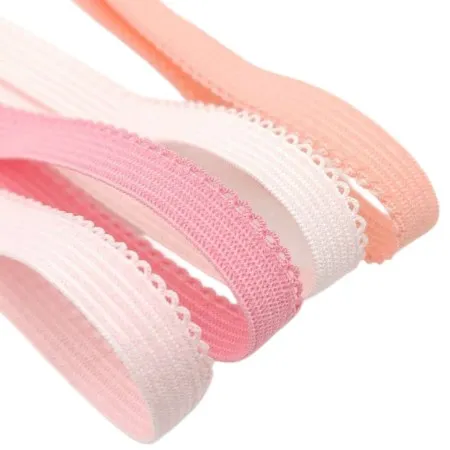
Elastic and garment tapes
Edging tape, binding tape, lingerie elastic, garment trims, waist belts and similar elastic or non-elastic bands.
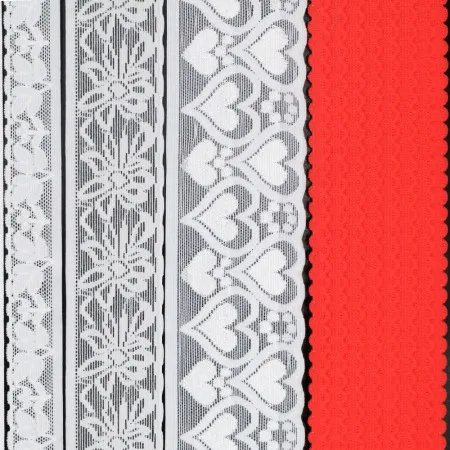
Lace bands and decorative trims
Narrow fabrics with a lace-like, open or decorative surface used in apparel, home textiles and daily-use textile products.
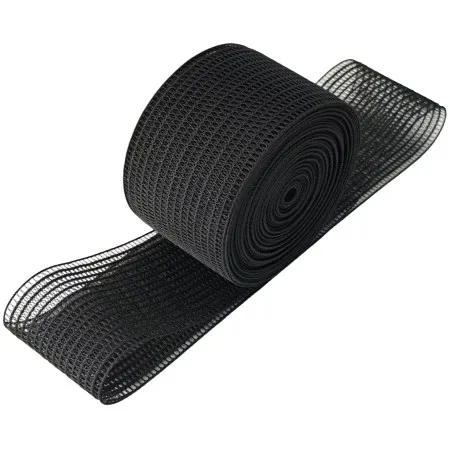
Medical and daily-use bands
Mask earloop tape, elastic bandage, support belt materials and other narrow products that need stable repeated production.
A simple rule: if the sample can be measured as a long tape, band or trim, and you can define its width, material and stretch, it is a realistic starting point for this type of machine.
Why Crochet Machines Are Easy to Confuse
A home crafter and a factory buyer may both ask for a crochet machine, but they usually need different equipment. One person may be thinking about hats, scarves or blankets. Another may need elastic tape, lace band or bandage material for factory production.
A factory crochet machine does not copy every hand stitch or shaped craft pattern. Hand crochet is still the right method for flexible, one-off or highly shaped craft work.
Small circular knitting tools are often used for tubes, hats and scarves. They should not be confused with industrial machines used for tapes, lace bands and elastic bands.
In factory production, yarn feeding, tension and take-up are controlled so the same narrow fabric structure can be produced continuously.
Usually not a fit: hand-crocheted blankets, amigurumi, hats and free-form craft products. Industrial automatic crochet machines are built for repeatable narrow fabric production, not shaped craft pieces.
How Machine Crochet Works in Factory Production
In industrial use, machine crochet is not about copying every hand movement. The goal is to keep yarn feeding, tension, stitch formation and take-up stable enough to make the same narrow fabric again and again.
Unlike hand work, the machine cannot freely change shape from piece to piece. It works best when the product has a stable width, predictable material behavior and a repeatable surface structure.
A tape, lace band, trim, elastic band or bandage that needs repeatable structure and continuous output.
A shaped craft item, blanket panel, toy or one-off design that depends on flexible hand work.
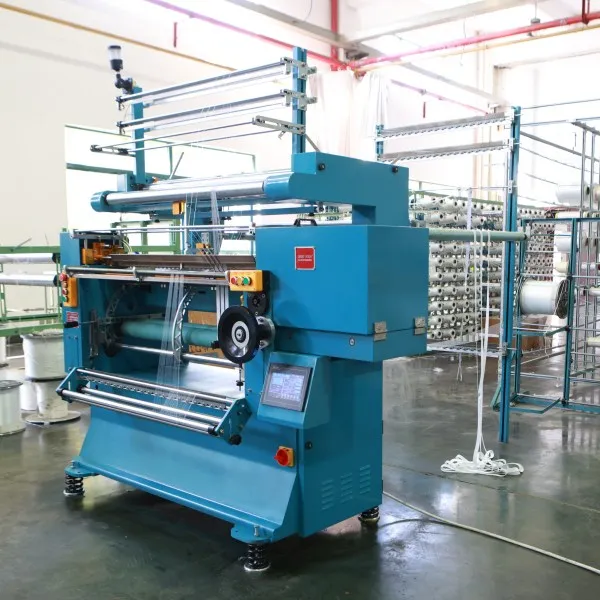
Which Machine Fits Your Sample?
Two products can look similar in a photo but still need different machines. A lace band, braided cord and woven tape may all be sold as a trim or strap, but the structure decides the machine type.
| If your sample is... | More likely machine type | Why |
|---|---|---|
| Flat elastic tape, lace band, decorative trim, edging tape or bandage | Automatic crochet machine | Best fit for repeatable narrow fabrics, including elastic and non-elastic tape or band structures. |
| Round cord, drawcord, rope or shoelace-style cord | Braiding machine or cord knitting machine | The product body is cord-like rather than a flat or lace-like narrow fabric. |
| Rigid woven webbing, label tape or strap with a woven structure | Needle loom machine | The structure is woven, so it is usually made on a needle loom instead of a crochet machine. |
| Blanket, hat, toy, amigurumi or hand-craft shape | Hand crochet or hobby equipment | The goal is a shaped craft item, not continuous industrial narrow fabric production. |

What Affects Machine Choice?
Once you know the sample is a tape, band or trim, the next question is how it should run in production. These practical details usually matter first.
Finished width affects how many strips can run at once and how the production layout should be planned.
Elastic and non-elastic materials behave differently under tension, so material information matters early.
A simple tape, decorative trim and lace band may require different guide-bar or pattern considerations.
Voltage, available space, target output and operator workflow can affect the recommended setup.
Details That Help with a First Machine Recommendation
A machine recommendation is easier when the sample is visible and measurable. For tapes, bands, trims and bandage materials, the most useful information is usually simple: photos, width, material, stretch and expected production needs.
Show the sample clearly. Send a front view, back view and edge view. For elastic products, a short stretch video is helpful.
Share width and material. Finished width, yarn type and elastic or non-elastic behavior help narrow the machine setup.
Explain the final use. Edging tape, lace band, mask earloop tape, waist belt and bandage samples may require different priorities.
Mention the production target. Approximate output, working hours and local voltage are enough at the early stage.
Working on a Tape, Lace Band or Elastic Narrow Fabric?
For a production sample such as edging tape, lace band, mask earloop tape, waist belt or bandage material, you can review automatic crochet machine options or send a sample photo before choosing a model.
FAQ About Crochet Machines
Can crochet be done by machine?
Yes. Crochet-style narrow fabrics can be produced by machine when the product is a repeatable tape, lace band, trim, elastic band, mask earloop tape, waist belt or bandage material. It is different from hand crochet used for shaped craft pieces.
Is an automatic crochet machine the same as a home crochet machine?
No. Home craft tools are usually used for small items such as hats, scarves or tubes. Industrial automatic crochet machines are built for factory production of narrow fabrics such as tapes, bands, lace bands and trims.
Can a crochet machine make blankets or hats?
Industrial crochet machines for narrow fabrics are not designed for hand-crocheted blankets, hats, toys or amigurumi. Those products usually belong to hand crochet, hobby knitting tools or other textile processes.
What products can industrial crochet machines make?
Common products include edging tape, binding tape, decorative tape, lace band, mask earloop tape, waist belt, elastic bandage and other elastic or non-elastic narrow fabrics used in apparel, home textiles, medical products and daily-use textile items.
Is a crochet machine the same as a braiding machine?
No. A crochet machine is usually considered for flat or lace-like narrow fabrics. A braiding machine is often used for round cords, ropes, shoelace-style cords and drawcords.
How do I know whether my sample is suitable?
Start with the sample structure. If it is a continuous tape, band or trim with a defined width and repeatable construction, an automatic crochet machine may be suitable. If it is a round cord, woven webbing or shaped craft item, another machine type may be a better fit.


