
Braided Rope vs Twisted Rope vs Knitted Cord
These three structures can look similar from a distance, but they behave very differently once you start developing a real product. For shoelaces, drawcords, decorative cords, bag handles, and textile rope products, the structure affects the surface, hand feel, finishing method, and machine choice.
Quick answer: Braided construction is interlaced, twisted rope is twisted, and knitted cord is looped. In simple terms, braided products usually look cleaner and more controlled, twisted rope keeps a more traditional rope character, and knitted cord feels softer and more textile-like.
- Braided is often chosen for a smooth surface, better pattern control, and a more consistent product look.
- Twisted is still useful when the product should clearly look and behave like rope.
- Knitted works well when softness, flexibility, and textile feel matter more than a classic rope profile.
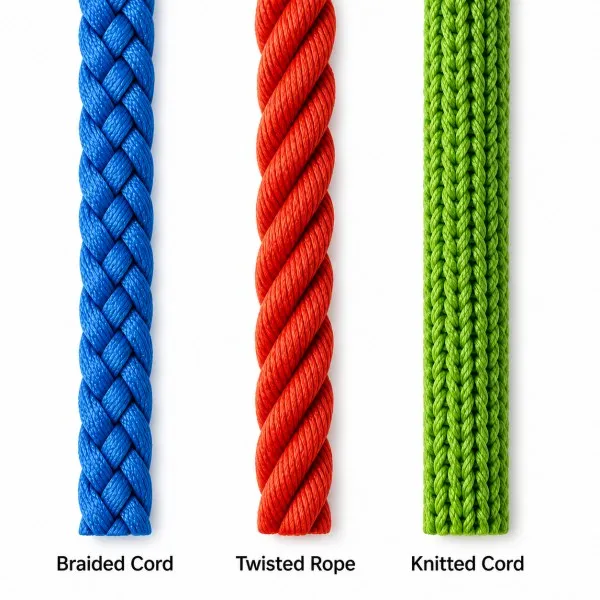
Braided rope and braided cord are often what buyers actually want
Many buyers begin by saying they need “rope,” but once the sample is on the table, the product turns out to be braided. Braided construction gives a cleaner surface, a more controlled shape, and more freedom in color and pattern design.
That makes braided cord a common choice for shoelaces, drawcords, decorative cords, handle ropes, and many textile accessories where appearance matters as much as basic function.
Shoelaces, hoodie cords, bag handles, decorative cords, accessory cords, and products that need a smooth and consistent outer surface.
It looks cleaner, carries patterns better, and usually works well with end finishing such as tipping, binding, or decorative hardware.

Twisted rope still has its place
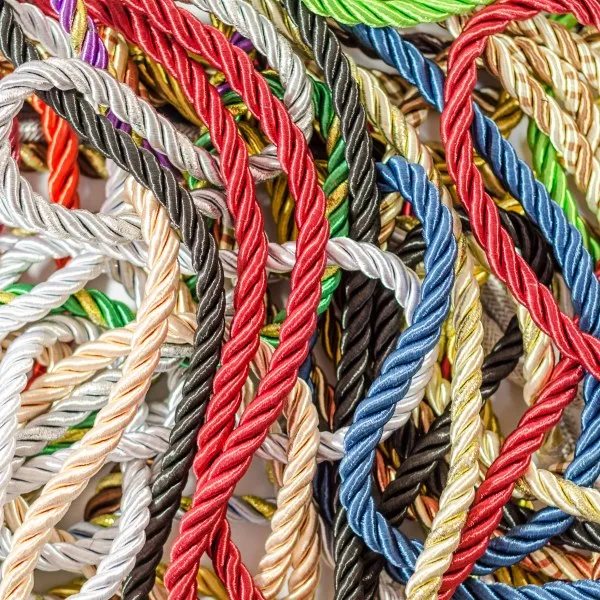
Twisted rope is not old-fashioned by default. It is simply a different construction. You can usually see the strands wrapping around each other, which gives the product a more traditional rope character and a more open surface than braided construction.
It still makes sense for utility ropes, decorative ropes with a more rustic look, and product directions where that rope identity is part of the appeal. In some cases, easy splicing or a familiar rope appearance is exactly why twisted rope is preferred.
General-purpose rope, decorative rope, agriculture and utility directions, and products where a classic strand look matters.
If you want a tighter surface, finer pattern control, or a more polished branded look, buyers often move from twisted rope toward braided construction.
Knitted cord sits closer to textile trimming than to classic rope
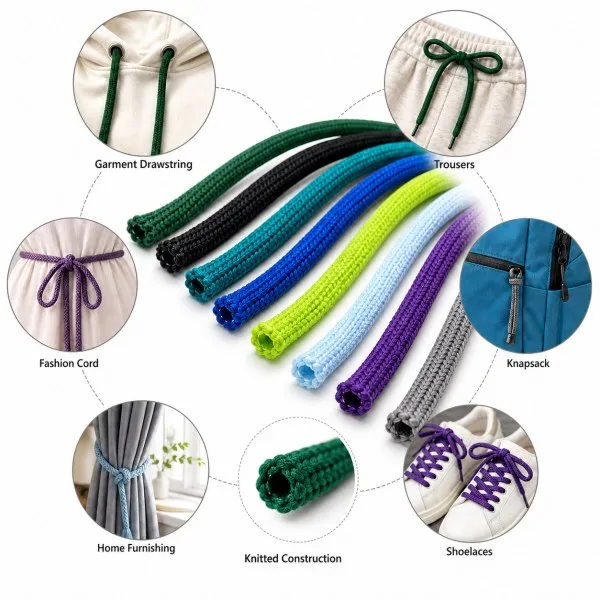
Knitted cord is built with looped stitches, so the result usually feels softer and more flexible than either braided or twisted construction. It may not look like a traditional rope at all, and that is often the point.
For garment drawstrings, fashion cords, decorative textile cords, and soft accessory cords, knitted construction can feel more natural in hand and easier to align with a fabric product.
Apparel drawstrings, decorative cords, fashion accessories, and products that need a softer textile touch rather than a firm rope look.
It can look softer, feel friendlier in hand, and sit more naturally next to knitwear, woven garments, and textile trims.
The short comparison
| Point | Braided rope / cord | Twisted rope | Knitted cord |
|---|---|---|---|
| How it is built | Interlaced yarn carriers | Twisted strands | Looped knitted structure |
| Surface and feel | Clean, controlled, often smoother | More open, more rope-like | Softer, more textile-like |
| Typical product direction | Shoelaces, drawcords, handle cords, decorative cords | Utility rope, decorative rope, classic rope products | Garment drawstrings, soft accessory cords, textile trims |
| End finishing | Often easy to tip, bind, or add hardware | Depends on strand structure and use | Often chosen with softer textile finishing in mind |
| Likely machine type | Braiding machine | Twisting or rope-making setup | Cord knitting machine |
Match the structure to the right machine
Once the sample structure is clear, the machinery question becomes much easier. The wrong machine conversation usually starts when the sample is called “rope” without anyone checking whether it is actually braided, twisted, or knitted.
If your sample is braided
A braiding machine is usually the right direction for shoelaces, braided cords, decorative cords, and other products that need an interlaced structure.
If your sample is knitted
A cord knitting machine is the more natural choice when the product depends on a softer, looped, textile-like construction.
If your sample is truly twisted
Twisted rope usually requires a twisting or rope-making setup rather than a braiding or cord-knitting machine. It is worth confirming this before you ask for a machine recommendation.
Practical tip: If you are unsure, send a close-up product photo, the diameter, material, and target output. That is usually enough to narrow down the right machine type.
FAQ
What is the main difference between braided rope and twisted rope?
Braided rope is interlaced, while twisted rope is built by twisting strands together. Braided construction usually looks cleaner and more controlled. Twisted rope keeps a more traditional rope appearance.
Is knitted cord the same as braided cord?
No. Knitted cord is made with looped stitches, while braided cord is made with interlaced carriers. Knitted cord is usually softer and more textile-like in hand.
Which structure is better?
There is no single best structure. The right choice depends on the product look, hand feel, end finishing, and machine setup you need.
What machine makes braided cord?
Braided cord is commonly made on a braiding machine. The exact model depends on product diameter, carrier count, material, and target output.
Can one machine make braided, twisted, and knitted products?
Usually no. Braiding, twisting, and knitting are different production methods, so they normally require different machine types.
Need help checking a sample?
If you are comparing a braided cord, twisted rope, or knitted cord sample and want to know which production method fits better, send the sample details to Credit Ocean. We can help you judge whether the next step should be braiding or cord knitting.


