Needle Loom Explained: Key Components, Shuttleless Working Principle, and a Buyer’s Selection Checklist

If you are researching a needle loom, you may also see related terms such as narrow fabric weaving machine, webbing machine, ribbon making machine, or bandage making machine. Some buyers also search older market terms like “automatic loom machine” or “high-speed loom” when they actually mean narrow fabric production.

This guide focuses on one thing: helping you understand what a needle loom is, how it really works, and what information you should prepare to select the right configuration—without getting lost in confusing “types.”
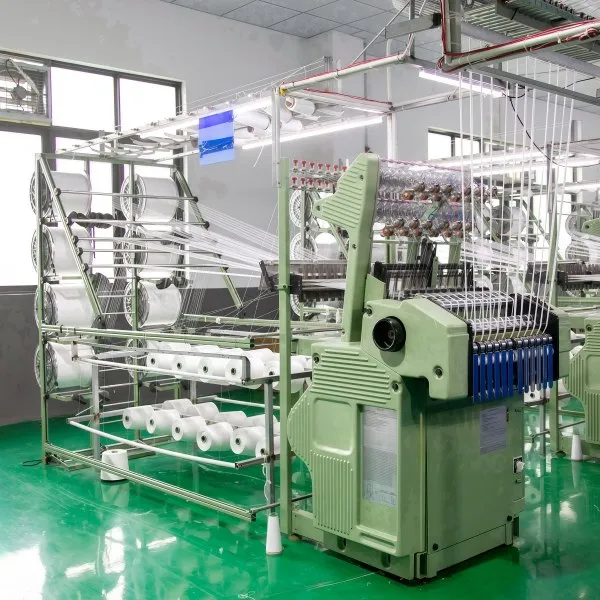
needle loom overview

What Is a Needle Loom?

A needle loom is a shuttleless narrow fabric loom designed to weave narrow-width textiles such as webbing, tapes, ribbons, elastic bands, and medical bandages.

What makes it different from many traditional shuttle looms is the weft insertion method. In a typical needle loom setup, a weft-inserting needle carries the weft into the shed instead of using a shuttle. Many configurations also include a dedicated selvedge (edge) system to keep edges stable and clean during high-speed running.

In practical terms, a needle loom is built for:
  • stable structure (consistent picks and compactness),
  • repeatable width and edge quality,
  • efficient narrow fabric output for industrial production.

Video Demo

How Does a Needle Loom Work?

Most professional loom discussions follow the same logic: weaving quality comes from controlling a few core motions. For a needle loom, it is easiest to understand in this order:

Step 1: Let-off (Warp delivery)

Warp yarns are released from the warp beam or creel with controlled tension. Stable let-off is the foundation of stable fabric.

Step 2: Shedding (Forming the shed)

Heald frames (heddles) separate warp ends to create an opening (shed). The shed timing must match the insertion timing.

Step 3: Weft insertion (Shuttleless insertion by needle)

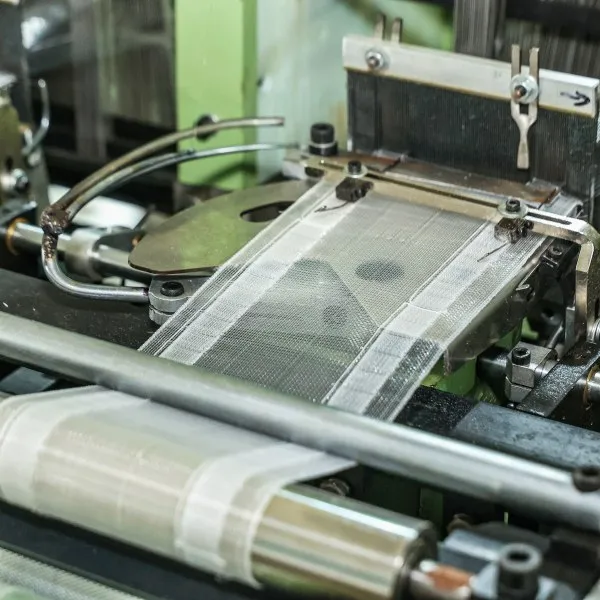
A weft needle moves in and out to place the weft into the shed. This is the core “needle loom” feature. The insertion timing, needle condition, and weft tension strongly affect edge and surface quality.

Step 4: Beating-up + Take-up (Compaction and winding)

The reed beats the inserted weft to the fabric fell, and the finished narrow fabric is pulled forward and wound with controlled take-up tension. If take-up is unstable, defects show up fast—loose structure, width variation, uneven surface, or inconsistent roll hardness.
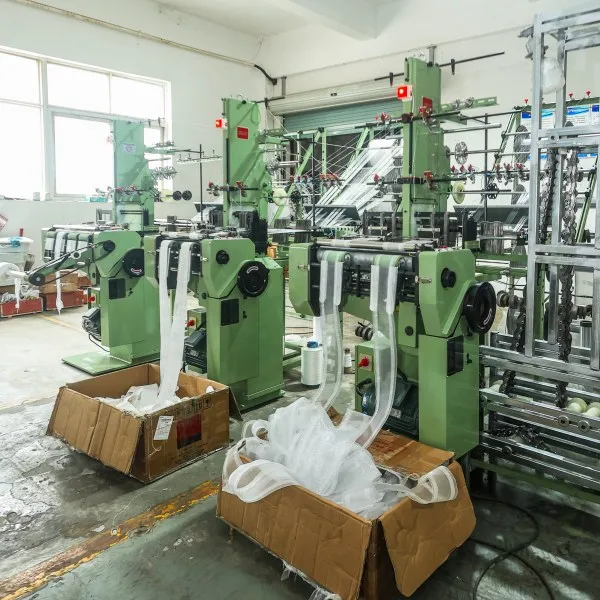
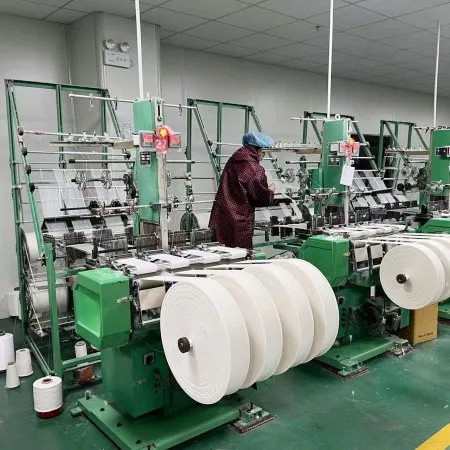
needle loom production line
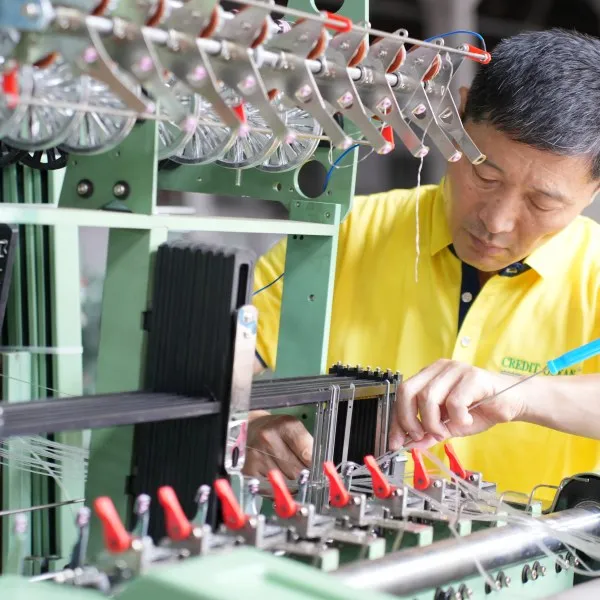
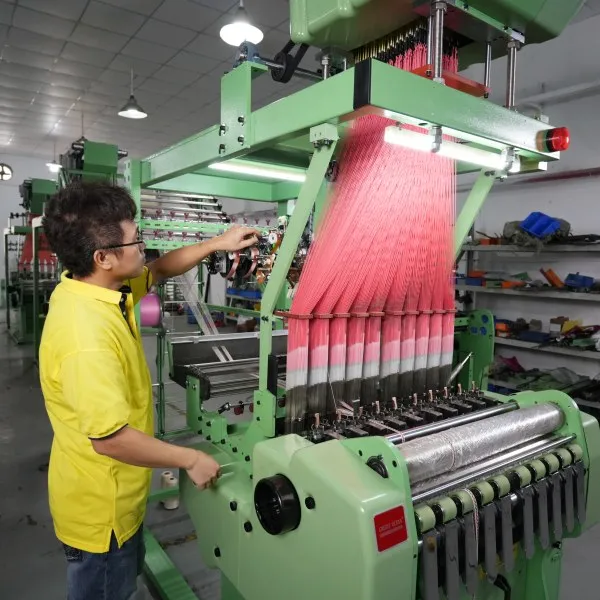
Credit Ocean Worker Handling Needle Loom

Key Components and What They Actually Do

Below are the components buyers and operators most often talk about, with the reason each one matters:
  • Warp creel / warp supply: keeps warp feeding smooth and reduces tension fluctuation.
  • Let-off system: controls warp tension over long runs.
  • Heald frames (shedding system): forms the shed; shedding stability directly affects uniformity.
  • Weft supply and weft tension control: prevents slack, loops, or weft break issues.
  • Weft-inserting needle: the shuttleless “insertion tool” that defines this loom family.
  • Reed (beating-up): compacts picks and stabilizes fabric structure.
  • Selvedge system (edge control): maintains clean, stable edges; configuration depends on fabric and machine design.
  • Take-up and winding: controls fabric tension, roll shape, and package consistency.
  • Patterning option (if needed): for patterned narrow fabrics, an electronic jacquard head can be added (details belong in a dedicated jacquard guide, not here).

“Types of Needle Looms” Without the Confusion

Many articles list “types” in a way that mixes control style, application, and performance. A cleaner way is to classify by what actually changes the machine’s capability.
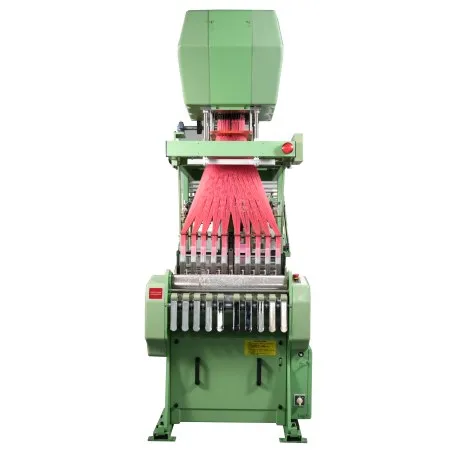
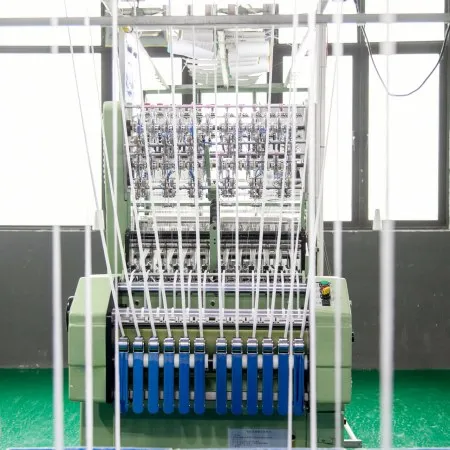
jacquard needle loom

A) By patterning capability

  • Standard narrow fabric needle loom: for plain or regular structures (webbing, tapes, basic ribbons).
  • Electronic jacquard narrow fabric loom (computerized narrow fabric jacquard loom): for logos, pictures, complex patterns, and high-end label/webbing designs.
If your main goal is pattern detail and repeatability, the jacquard system becomes the decision center.
Heavy Duty Needle Loom

B) By fabric family and running load

  • Webbing / safety webbing oriented setups: stronger frame, higher tension stability, often used for products like safety belt webbing or heavy straps.
  • Elastic / bandage oriented setups: focus on stretch control, edge stability, and consistent take-up under elastic behavior (common for elastic tape needle loom or bandage production).
high speed needle loom

C) By market naming (not real “mechanism types”)

Terms like ribbon making needle loom machine, seat belt needle loom machine, niwar tape making machine, or plaid ribbon machine are usually “what you want to produce,” not a fundamentally different loom principle. The correct approach is to map your product requirements to the right configuration.
needle loom working

How to Choose the Right Needle Loom (Buyer Checklist)

If you want a recommendation that is actually useful (not a generic quote), prepare the inputs below:
  • Product category: webbing, ribbon, elastic tape, bandage, strap, etc.
  • Finished width and thickness range: the most important physical constraint.
  • Material behavior: polyester/nylon/cotton vs elastic yarns; friction and stretch change tension needs.
  • Structure requirement: plain vs twill-like effects; edge style requirement; stiffness/hand-feel target.
  • Strength and end-use: for heavy-duty webbing, load requirements change machine configuration.
  • Pattern requirement: if you need logos/pictures, specify whether you need jacquard patterning.
  • Output target: not just “high-speed,” but your expected production goal and shift plan.
  • Take-up and packaging: roll diameter targets, winding hardness, and handling preference.
  • Local voltage and factory constraints: power, space, operator skill level.
Tip: if you can share a sample photo and your target spec, selection becomes much faster and more accurate.

Common Operating Problems (With Practical Troubleshooting)

These issues are common in narrow fabric weaving. The key is to troubleshoot in a consistent order.

Problem 1: Frequent yarn breakage (warp or weft)

  • First check: yarn path friction points (guides/eyes), burrs, dust build-up.
  • Next check: tension setting changes after material or yarn supplier changes.
  • Then check: timing and condition of the insertion needle and edge/selvedge elements.
Practical note: many “random breakage” problems are not random—they come from one worn contact point.

Problem 2: Width variation or unstable edges

  • First check: take-up tension and winding stability (too loose or too tight changes width).
  • Next check: shedding stability (heald movement and warp tension balance).
  • Then check: selvedge configuration and edge yarn tension balance.

Problem 3: Uneven surface, loose picks, or inconsistent compactness

  • First check: beating-up consistency (reed condition and alignment).
  • Next check: insertion timing and weft tension.
  • Then check: let-off stability over long runs (tension drift causes gradual quality change).

Problem 4: “The machine runs, but the product does not meet appearance targets”

This is usually a configuration mismatch: yarn behavior + structure requirement + take-up package were not defined clearly during selection. That is why the selection checklist matters.

Credit Ocean Team Checking Needle Loom

FAQ

FAQ

What is a needle loom used for?

Needle looms are used to weave narrow fabrics such as webbing, tapes, ribbons, elastic bands, and bandages with stable structure and repeatable quality.

FAQ

Why is a needle loom considered “shuttleless”?

Because the weft is inserted without a traditional shuttle. Many needle looms use a weft-inserting needle to place the weft into the shed, supporting efficient narrow fabric production.

FAQ

When do I need an electronic jacquard narrow fabric loom?

When you need logos, pictures, complex patterns, or premium decorative effects. If appearance detail is a core requirement, jacquard capability becomes the key decision factor.

FAQ

What information should I prepare before asking for a model recommendation?

Product category, width/thickness range, material behavior, structure requirement, strength/end-use, pattern need (jacquard or not), output target, take-up/package preference, and local voltage.